
 Myth: We’ve had a couple of lessons so we know what to do
Fact: Learning to swim does not happen overnight! One of our most frequently asked questions is “how long will it take my child to learn how to swim?” and the answer is not a simple one! The question itself is not a simple one either as there are many interpretations of what constitutes as ‘knowing how to swim.’ There is a considerable science to learning how to swim and, as with learning any skill, there are many different processes that work together. That old trick of ‘rubbing your tummy and patting your head at the same time?’ It sounds simple, right? But in reality we know that it is far more complicated than it seems. Swimming is a bit like this. Complex biomechanics underpin even the seemingly simplest of skills. Our brains need to send the exact signals to the corresponding muscles and this takes time to master. When learning a skill for the first time, neural pathways firstly need to be established and then reinforced with regular practice. Here at Col Jones we understand the importance of continually developing these skills with practice and time to strengthen the neural pathways and build muscle memory. Once these have developed, we also understand the importance of time – after a skill is mastered we need to perform it at the ‘autonomous stage.’ That’s the stage when the skill is performed with little thought and much less effort than the earlier stages of learning. At Col Jones we ensure our students demonstrate each required skill at the autonomous stage before progressing to learning new skills, to reinforce all that hard work! Myth: “I just want my child to be capable of saving himself not go to the Olympics!" Fact: In an aquatic emergency, skills can deteriorate and often deteriorate rapidly. Swimmers who only have the ability to move a few metres through the water, are at best weak swimmers and thus at a greater risk than those who are more competent. The more repetitions (i.e. practice and time) that a child acquires in learning to swim, the more automatic and safer the skill becomes. However, it is important to realise that even the most competent of swimmers can (and do) struggle in aquatic emergencies. Often we hear stories in the media of parents and bystanders tragically drowning in an attempt to rescue a swimmer in trouble even though ‘they could swim.’ If these competent swimmers can drown, then no one is truly ‘drown-proof.’ At Col Jones we stress the importance of educating our parents and carers that whilst swimming lessons combined with active parental supervision are important parts of safer swimming, no one is 100% safe. Author: John Sortwell  Winter is often a popular time for families to seek warmer weather on holidays. With warmer weather however, comes exposure to more aquatic environments. Some of these environments your family (especially children) may not be as familiar with, such as beaches, water parks, resort pools, and rivers, just to name a few. Perhaps they are places you have visited before on holidays - but these may have changed since your last visit.
We have looked once again to the Royal Life Saving Society Australia (RLSSA) for their advice:
For more information on water safety click on https://www.royallifesaving.com.au/stay-safe-active/communities/how-to-keep-children-safe. The advice they provide is invaluable. Author: John Sortwell - Centre Manager Summer may have ended but the risk of drowning still remains. It is so important that parents remain vigilant with their children around water, not just at pools and beaches in the warmer months but around the home, especially the bath year-round. According to Royal Life Saving Australia, the majority of bathtub drowning deaths occur when there is an interruption to routine, such as the phone or doorbell ringing. Many parents and carers believe that they’ll only be gone for a minute - but this is enough time for a tragedy to occur. In Australia, on average, 5 children under the age of five drown, and 47 are hospitalized due to bathtub drowning incidents each year. One in four hospitalizations results in permanent injury such as brain damage. As a parent or carer it is hard to be in all places at once and bath time poses one of the highest risk of drowning for babies and toddlers. Like Col Jones Swim School, Royal Life Saving are committed to educating parents to reduce the number of drownings. They have developed the Keep Watch @ Bath Time program which informs parents and carers on ways to prevent their children from drowning through Active Supervision. It has four key elements:
Actions to help prevent your child drowning during bath time:
AuthorJohn Sortwell. Centre Manager What is Resilience? Resilience is the ability to bounce back after challenges and tough times. Why Is Resilience important? Building mental resilience helps young people to deal with difficulties that are a part of everyday life, it also helps them develop the basic skills and habits to deal with challenges later in life as they move into adulthood. Young people with greater resilience are better able to manage the stress that is a common response to difficult events. Stress is a risk factor for mental health conditions such as anxiety and depression. How Sport Can Build Resilience Dr Martin Turner, Senior Lecturer in Sport and Exercise Psychology at Staffordshire University has been investigating what it is that helps people react well to adversity. His research has shown that "the beauty of sport at any level is that it provides a test for us to see how well we can react to adversity. It provides the perfect challenge for the way we think and feel under pressure." Dr Martin describes how he has worked with many amateur athletes and how these athletes were better able to handle exams and interviews because they have performed in-front of crowds of people in their sport. These athletes proved to themselves through sport that pressure won't kill them, and that they can cope with scrutiny and evaluation on the field of play, just like in an exam or interview. Dr Martin goes on to say that some parents believe that the pressure of competitive sport should be avoided and that it could be emotionally painful and difficult and that sport should be purely for fun and enjoyment. Dr Martin argues that "resiliency is developed from childhood, and therefore young people should be challenged and tested." But he also adds that "these challenges have to be met with strong support structures (such as positive parenting as well as positive coaches) that help young competitors realise that their adverse experiences are non-life threatening learning opportunities." Dr Martin also suggests " we challenge ourselves." The sports psychology lecturer proposes to not just think of sport in terms of its health or social benefits (which is a great reason to participate) but also as a means to build a resilient mindset helping our children to deal with life's many challenges. AuthorJohn Sortwell 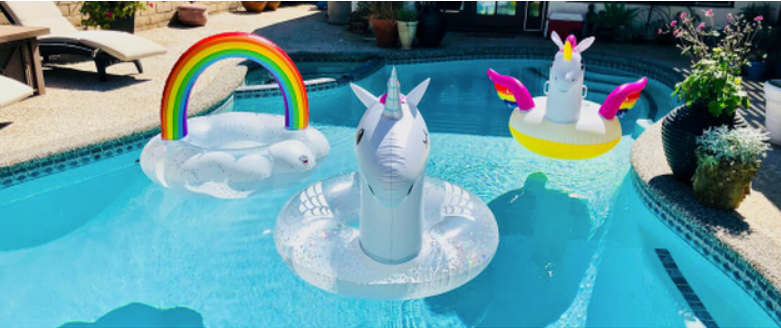 For children aged under 5 years old, home swimming pools are the leading location for drowning.
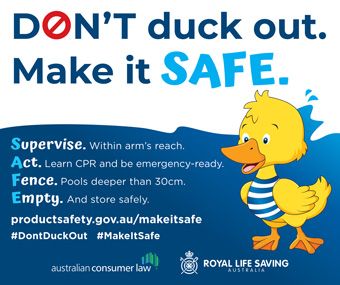
Did You Know? In Australia, ALL private swimming pools or spas that can hold 30cm of water or more must legally have a safety barrier around them. Royal Life Saving Society’s Keep Watch Advice: 1. Supervise: All your attention, all of the time 2. Restrict Access: Ensure there is an adequate barrier between the water and your child 3. Water Awareness: Enrol in swim lessons to gain familiarity and water confidence 4. Resuscitate: Learn the life saving skills of CPR If you have ensured that your pool gate is properly closed (remember to NEVER prop it open) and nobody is using the pool, the dangers have been removed, right? Actually, there is more that you can do to keep everyone safer. Colourful pool toys when left in the pool or around it become temptations for little ones who may try to get through or over the fence to reach the toys. Make sure that all pool toys are safely stored out of sight when not in use. Author: Keirsten Sortwell - mother of 3 and aquatic educator for over 30 years Myth: Children who have not upgraded to a new level in a while are not progressing.
Fact: For a student to upgrade to the next level, they need to learn several small skills to master the overall 'goal' of the current level. A student does not acquire all these skills immediately. Rather, learning is a process in which skills are acquired in increments which may seem small or insignificant but which are in fact vital to mastering each level. For example, in our White Stingray level where students are learning the Breaststroke kick, there are several components to mastering the correct technique. Students need to be able to turn their feet out, perfect the motion and build the strength required to generate the 'push' (and this is only the basics!) Our teachers and supervisors know how tricky it is to master just one of these skills and understand the importance of celebrating with a child when they do. From a parents point of view it may seem as though the progression is non-existent, when in fact your child is working hard at making small (but still significant!) gains within their level. We encourage you to speak with our pool deck supervisors who monitor our students' progress closely. They will be able to explain the achievements already made in your child's level as well as the skills still to be attained, and will even be able to provide you and your child with some extra tips and encouragement. Look for them on pool deck in the red shirts! Author: Tiahna Sortwell - Pool Deck supervisor and Competitive Coach
It has been a real pleasure talking to our students and their parents and listening to stories of triumph, place-getting as well as the fun they had in participating. One of the recurring conversations with parents was the fact that they "just wanted their child to participate and not be sitting all day being just a spectator".
If your child is nearing the age when they can become eligible or weren't quite ready to compete this time round, here are some tips to get your child ready for the school swimming carnival the next time it comes around. 1. Consistency is the key: Turning up regularly to your lessons is extremely important in skill acquisition. Just like learning other physical skills such as tennis, surfboard riding, ice-skating etc swimming requires time and practice. Turning up to your lessons is vital to the learning process! 2. No Breaks over Winter: The next block of school swimming carnivals start again in December 2024 (Catholic Primary Schools) and in February 2025 (Public Schools). So, we have roughly 10-12 months to prepare. By "taking a 3-4 month break over winter" and returning in September/ October it leaves only 8-12 weeks to "catch-up" to lost skill practice and swimming fitness levels. It's even less if you take into account a summer holiday vacation. This places a child's preparation at a disadvantage compared to the child who swims all year round maintaining and further developing their swim skills and swimming fitness levels. So my tip is to swim through winter for the best possible preparation. We have indoor heated facilities all year round, so no matter what the weather outside the learner will be comfortable. 3. Swim Club / Friday Night Races: Turning up to a school swimming carnival for the first time can be quite daunting. To help make the experience easier and more enjoyable why not come along to our Friday night races with Jones Swim Club. Everyone is welcome. Jones swim club is a caring and supportive environment and a great way to be introduced to swim races. The races are held every second Friday night. Please check with our reception staff for more details. Hopefully the above tips help in giving parents a few suggestions on how to best prepare your child to prepare for the next swimming carnival. As always if you have any further questions, please contact one of our friendly staff who will be more than happy to help you. We want to see your child excel! Author: John Sortwell - Centre Manager, ex-competitive swimmer, father of 3 and aquatic educator for over 30 years.
 The simple answer is YES!
Exercise is one of the best ways to keep your immune system working effectively. Exercise stimulates the immune system to be more alert and vigilant for any pathogenic invaders that you may encounter. A 2011 study of lifestyle habits found that physical activity was the leading factor that predicted whether a person got an upper respiratory illness or not. The study found that participants who worked out at least five days per week had a 43% lower risk of developing an upper respiratory tract infection when compared with largely sedentary participants who worked out less than once per week. It's important to note that a "workout" was defined as at least 20 minutes of moderate exercise. This means each of our swimmers at Col Jones are easily exceeding this parameter. We encourage each of our students to keep swimming during this winter and brave the cold! References: www.usms.org/fitness-and-training/articles-and-videos/articles/how-swimming-can-help-you-boost-your-immune-system-during-cold-and-flu-season bjsm.bmj.com/content/45/12/987 Exercise and the Brain: How Fitness Impacts learning We always know that when we get out and do some exercise, we always feel better afterwards. We know that when we do exercise it's great for the heart and lungs and also helping to maintain and grow muscle tissue. But did you know exercise is important for brain function. Dr. John Ratey, an associate professor of psychiatry at Harvard medical school has explored the connection between exercise and the brain. He found there was strong evidence that aerobic exercise physically remodels the brain for peak performance on all fronts. In his book, Spark: The Revolutionary New Science of Exercise and the Brain, Dr. Ratey writes that exercise improves learning on three levels: "First, it optimises your mind-set to improve alertness, attention, and motivation; second, it prepares and encourages nerve cells to bind to one another, which is the cellular basis for logging in new information; and third it spurs the development of new nerve cells from stem cells in the hippocampus." In short, not only does exercise help the brain to get ready to learn but it actually makes retaining information easier. A suburban school district outside of Chicago in the United States is proving this point. The Naperville, Illinois district implemented an early morning exercise program called "Zero Hour", which sought to determine whether working out before school gives students a boost in their reading ability and other subjects. Since introducing this program, the district has seen remarkable results in both wellness and academic performance. Dr Ratey's research also shows that that exercise can be the best defence against a lot of the common mental health issues that students struggle with. Dr Ratey found that exercise can ward off the ill effects of stress, alleviates anxiety and has a positive impact on depressive symptoms. Studies suggest that endorphins produced in the brain during exercise contribute to a general feeling of well-being. Enrolling your children in swimming lessons and swim squads not only enables the children to be safer around water but also has all these other major benefits that can contribute to an improvement in a child's wellbeing. AuthorJohn Sortwell - Centre Manager and keen advocate of the importance of exercise and physical activity for children.  Did you know that maintaining healthy lifestyle and participating in regular physical activity can lower the risk of developing limitations in your body by up to 50%.
A study at Indiana University found that swimmers aged over 35, swimming, approximately 3,200 to 4,500 metres three to five times a week, delayed the ageing process. But don't be intimidated by those numbers! The research shows that even a small amount of swimming each week helps you stay younger for longer. Swimming works muscles without placing pressure on joints and limbs compared to impact on a hard surface. This means it is the perfect low-impact sport for anyone and everyone! There are also numerous mental health benefits of regular swimming too! Swimming releases endorphins in your brain that helps to provide a sense of wellbeing and happiness. Studies have also shown that participating in regular swimming can reduce stress and anxiety. Although swimming is usually an individual sport, there are plenty of opportunities to meet new people and socialise , increasing your social wellbeing too! At Col Jones Hurstville, we offer recreational lap swimming for $7 every Monday - Friday from 7am - 11am. If you have any further questions, please don't hesitate to call us on (02) 9579 3800 Read more: www.swimming.org/justswim/stay-younger www.bupa.co.uk/newsroom/ourviews/benefits-of-swimming
It has been a real pleasure talking to our students and their parents and listening to stories of triumph, place-getting as well as the fun they had in participating. One of the recurring conversations with parents was the fact that they "just wanted their child to participate and not be sitting all day being just a spectator".
If your child is nearing the age when they can become eligible or weren't quite ready to compete this time round, here are some tips to get your child ready for the school swimming carnival the next time it comes around. 1. Consistency is the key: Turning up regularly to your lessons is extremely important in skill acquisition. Just like learning other physical skills such as tennis, surfboard riding, ice-skating etc swimming requires time and practice. Turning up to your lessons is vital to the learning process! 2. No Breaks over Winter: The next block of school swimming carnivals start again in December 2022 (Catholic Primary Schools) and in February 2023 (Public Schools). So, we have roughly 10-12 months to prepare. By "taking a 3-4 month break over winter" and returning in September/ October it leaves only 8-12 weeks to "catch-up" to lost skill practice and swimming fitness levels. It's even less if you take into account a summer holiday vacation. This places a child's preparation at a disadvantage compared to the child who swims all year round maintaining and further developing their swim skills and swimming fitness levels. So my tip is to swim through winter for the best possible preparation. We have indoor heated facilities all year round, so no matter what the weather outside the learner will be comfortable. 3. Swim Club / Friday Night Races: Turning up to a school swimming carnival for the first time can be quite daunting. To help make the experience easier and more enjoyable why not come along to our Friday night races with Jones Swim Club. Everyone is welcome. Jones swim club is a caring and supportive environment and a great way to be introduced to swim races. The races are held every second Friday night. Please check with our reception staff for more details. Hopefully the above tips help in giving parents a few suggestions on how to best prepare your child to prepare for the next swimming carnival. As always if you have any further questions, please contact one of our friendly staff who will be more than happy to help you. We want to see your child excel! Author: John Sortwell - Centre Manager, ex-competitive swimmer, father of 3 and aquatic educator for over 25 years. Col Jones Swim School will be re-opening on Monday 1st November. We are adopting a cautious and conservative approach to ensure when we do re-open we have taken every step necessary to do safely. This date also ensures our local community reaches a higher level of vaccination (> 80%) to further minimise the risk to both our customers and staff upon re-opening. The Government Health Order has mandated that staff customers (over 16) and carers must be fully vaccinated or legally exempt and show their status upon entry. Please note that whilst this health order is in place anyone 16 or older without proof of vaccination will not be allowed entry. Re-Booking ProtocolsThose customers who had existing monthly bookings until the end of June will be contacted in the next two weeks to confirm their intention to return upon re-opening and maintain their booking position. We appreciate your patience as we work to contact you.
From Monday 25th October, we will then be in a position to take new bookings. These new bookings can be made over the phone only starting from Monday 25th October. From Monday 25th October, our reception is contactable on 9579 3800 during the following hours:
We look forward to seeing you soon and thank you for your patience as we get prepared in the next few weeks! Dear our Col Jones families,
Following the announcement at 2pm today by the NSW Government, as of 6pm tonight 26th June, swimming pools are required to shut for 2 weeks during this lockdown. Any lessons that have been booked and paid for from Sunday 27th June 2021 up to and including Friday 9th July 2021 will be credited to your family credit in your swim school account. For our families who have booked in for our School Holiday Programs we will also be crediting the full cost of each course into your family credit in your swim school account. Lessons will resume as normal from Saturday 10th July 2021 unless advised by NSW Government. We thank you for your continued support and look forward to seeing you back in the pool soon! Take care these school holidays and stay safe. Yours in swimming and water safety, The team at Col Jones Swim Fitness Hurstville
In accordance with this philosophy, we strongly believe that forced submersions (also known as dunking) do not have a place in our curriculum. Whilst our policy is generally considered industry best practice, some swim schools continue to teach through forced submersions resulting in students developing a long-term fear of swimming.
Two of Australia’s leading bodies on learn to swim, ASCTA and Swim Australia, have recently released a Position Statement on Submersions. We are affiliated with both ASCTA and Swim Australia and are pleased to see that their position statement reflects what we have been teaching for years. ASCTA and Swim Australia “places the willingness and acceptance of the baby or toddler at the forefront of its submersion policy.” As evident here at Col Jones Swim School Hurstville, forcing any student’s (from baby all the way through to adults) head under the water is not practiced by our teachers. In fact, “submersion practices which are carried out on a baby or toddler without their obvious willingness is likened to enforced behaviour and is not ethically acceptable.” Instead, here at Col Jones Swim School Hurstville, we work to each student’s pace. We familiarise our youngest students in our baby and toddler classes with getting their faces wet in a fun environment using toys, songs and cueing. Our older students are taught to blow bubbles correctly at their own pace alongside learning other skills such as kicking and floating. We find this gradual method to be successful for students of all ages to confidently and independently submerge their faces under water. There is a real sense of achievement when a student learns to put their face under the water on their own terms. Learning to swim is a skill for life and we are committed to developing students who feel confident, safer and supported in the water. Author: Josephine Moss (Swim School Coordinator)
There is a considerable science to learning how to swim and, as with learning any skill, there are many different processes that work together. That old trick of ‘rubbing your tummy and patting your head at the same time?’ It sounds simple, right? But in reality we know that it is far more complicated than it seems especially for little ones. Swimming is a bit like this.
Complex biomechanics underpin even the seemingly simplest of skills. Our brains need to send the exact signals to the corresponding muscles and this takes time to master. When learning a skill for the first time, neural pathways firstly need to be established and then reinforced with regular practice. Here at Col Jones we understand the importance of continually developing these skills with practice and time to strengthen the neural pathways and build muscle memory. Once these have developed, we also understand the importance of time – after a skill is mastered we need to perform it at the ‘autonomous stage.’ That’s the stage when the skill is performed with little thought and much less effort than the earlier stages of learning. At Col Jones we ensure our students demonstrate each required skill at the autonomous stage before progressing to learning new skills, to reinforce all that hard work!
We have looked to Swim Australia to help 'debunk' some of the more common myths. The facts might just surprise you!
Myth: It's too cold to swim in winter. Fact: Parents often worry about bringing their children to swimming lessons during winter. Whilst the weather outside might be cooler, our pools remain heated all year round. In fact, we increase the temperature of our pools to between 32 and 34 degrees meaning that your little ones stay warm whatever the weather. Myth: Swimming in winter gives you colds and flu. Fact: Colds and the flu are viruses. Kids are at no greater risk of catching a cold or flu from swimming then they are from other public places such as school, daycare, shopping centres and playdates with friends. In fact, research published in the British Journal of Sports Medicine, found that upper respiratory tract infections (which includes sore throats and sinus infections) are reduced by more than 40% in those who remain physically active throughout autumn and winter. Myth: All ear infections come from swimming. Fact: Whilst outer ear infections can sometimes be caused by swimming in poor quality water, often inner ear infections are generally unrelated to swimming. In addition, Col Jones provides swimmers with crystal clean water provided by our state of the art water filtration and UV treatment plant. Backyard pools are perhaps the most obvious places which pose a risk of drowning, but even if you do not have a pool at home, the risk of drowning around the home is still very much present. There are many areas both inside the home and around the garden which present as dangers to young children. The Royal Lifesaving Society Australia (RLSA) have found that drowning deaths have occurred in the following places:
Often, it is young children and toddlers who are most at risk of drowning in these places and it is often when supervision is lacking and parents or carers attention is diverted. RLSA recommends that when there are known bodies of water around the home, that supervision is constant. Where possible, bodies of water should be removed - bathtubs emptied immediately, ice and liquids removed from eskies, and buckets emptied (particularly following rain).
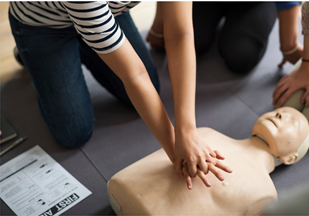
The Royal Lifesaving Society Australia also highlights the importance of supervision in social settings, where bodies of water around the home may not always be known and where attention may be divided. On many occasions there may be confusion as to who is watching the children, with adults wrongly assuming somebody else is. To avoid confusion, RLSA advise that in social settings at least one responsible adult is designated the 'child supervisor' at all times. For more advice and fact sheets, and to read a real life tragic story on an esky drowning death, head to the Royal Life Society Australia's website. Every month we highlight an aspect of water safety. This month we wanted to draw your attention to the importance of knowing CPR - a set of skills that is critical in many emergency situations, not just aquatic emergencies. According to the Royal Life Saving Society (Australia), in most drowning or near-drowning events, a family member is usually the first on the scene. Knowing what to do in an emergency situation and responding quickly is paramount to increasing a patient's chance of survival. Many children have their parents to thank for saving their lives, as they knew how to perform CPR. The NSW Study of Drowning and Near Drowning in Children found a child is four times more likely to survive a near drowning if parents know CPR and start it immediately. Professor Danny Cass, Trauma Surgeon at The Children’s Hospital at Westmead, said the study highlighted that early intervention is a lifesaver, “early CPR has been shown to contribute to greater survival rates with four times as many positive health outcomes.” To download and print a copy of a CPR chart, free of charge, visit NSW Ambulance. The information provided in the chart is not intended as a substitute for completing a First Aid or CPR course. By enroling in a CPR or First Aid course, you can learn how to save someone's life. Royal Life Saving Society (Australia) has many resources available for parents including CPR charts, fact sheets and courses available to enrol in. Visit www.royallifesaving.com.au/families/at-home/training/resuscitation-cpr for more information. DRS ABCD(This information is not intended to substitute the lifesaving skills learnt through participating in a First Aid or CPR course. Col Jones Hurstville urges all our parents and carers to enrol in a course today.) Danger - Check for danger Response - Is the patient unresponsive? Send for help - Shout for help, call 000 for an ambulance, and ask for a defibrillator if there is one available Airway - Check airway is open and unobstructed Breathing - Look, listen and feel for breathing CPR - Start CPR (30 compressions : 2 breaths) Defibrillator - Attach a defibrillator as soon as it is available
Myth: You need to wait 30 minutes after eating before swimming.
Fact: This is one of those messages that holds some truth. Eating a full meal directly before a lesson or training session is not recommended, particularly if it is an unhealthy choice (think fast food, greasy or fried food). This is because it can be uncomfortable to swim on a full stomach, and if a swimmer had eaten excessively, may lead to vomiting. Instead, experts recommend a small, nutritious snack before swimming such as a piece of fruit, a muesli bar or sandwich. We personally have found that those swimmers who have felt unwell have consumed foods such as cakes. That means donuts and hot chips are a no-no! Following their swim, the Gatorade Sports Science Institute advises that swimmers ensure they eat a healthy meal rich in protein and carbohydrates to aid in recovery. As always, water is always suggested for our squad swimmers before, during and after their session. It is sometimes easy to forget that swimming is a workout and students need to replace the fluids they have lost naturally through sweating. Summer may have ended but the risk of drowning still remains. It is so important that parents remain vigilant with their children around water, not just at pools and beaches in the warmer months but around the home, especially the bath year-round. Ross Gage, Chief Executive of the Australian Swim Schools Association (ASSA) states that “drowning doesn’t discriminate, and as accidents can occur in nearly any body of water, in any season, and to almost anyone, maintaining skills is paramount.” 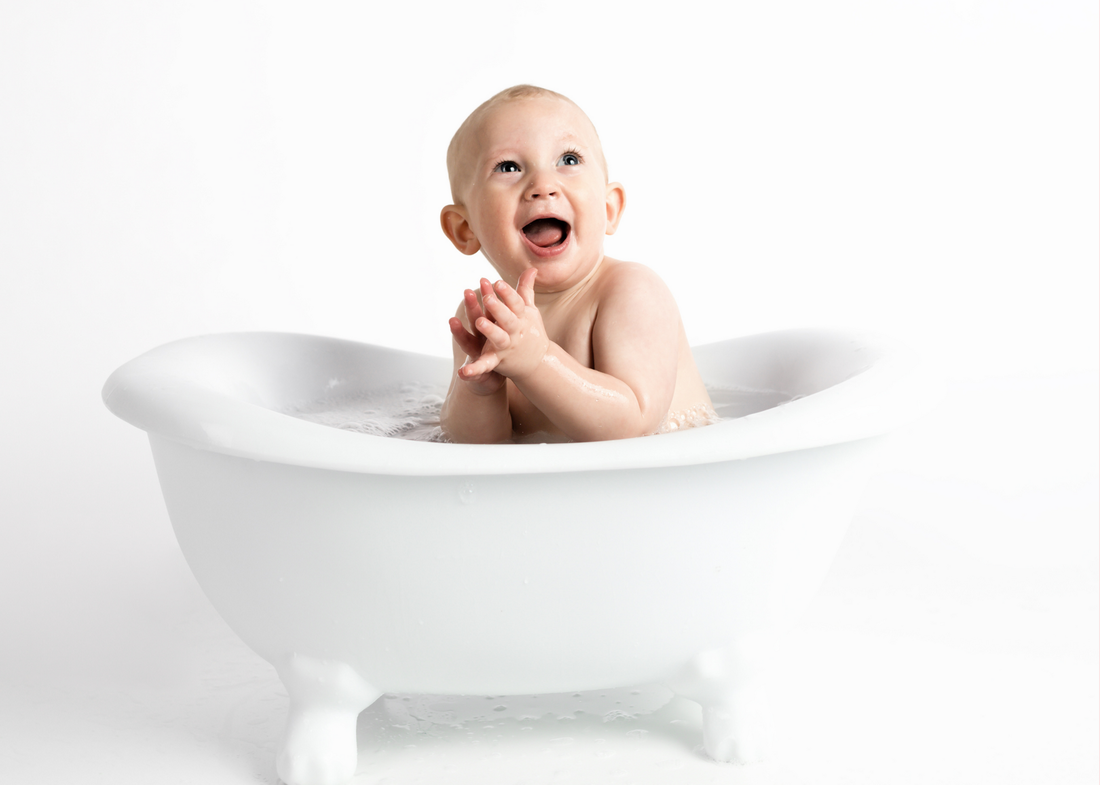 According to Royal Life Saving Australia, the majority of bathtub drowning deaths occur when there is an interruption to routine, such as the phone or doorbell ringing. Many parents and carers believe that they’ll only be gone for a minute - but this is enough time for a tragedy to occur.
In Australia, on average, 5 children under the age of five drown, and 47 are hospitalized due to bathtub drowning incidents each year. One in four hospitalizations results in permanent injury such as brain damage. As a parent or carer it is hard to be in all places at once and bath time poses one of the highest risk of drowning for babies and toddlers. Like Col Jones Swim School, Royal Life Saving are committed to educating parents to reduce the number of drownings. They have developed the Keep Watch @ Bath Time program which informs parents and carers on ways to prevent their children from drowning through Active Supervision. It has four key elements:
Actions to help prevent your child drowning during bath time:
AUTHOR Josephine Moss, Swim School Coordinator. Josephine and the team at Col Jones Swim School at Hurstville are committed to educating our families on water safety. To see more of the Royal Life Saving Society's bath time safety advice, please visit www.keepwatch.com.au. Myth: My child can swim now so I can just drop them off to their lesson. Fact: All children aged 12 years and under, must be accompanied and supervised by a parent or guardian at all times in the centre. Whilst our pool deck supervisors and teaching staff are an important safety feature in our programs, they are not intended to replace the close and active supervision of parents or caregivers. This is regardless of ability. Your child may be able to swim very well, however parental supervision is still required. Often we have students who need to use the toilet during their class and need their parent to accompany them. There are also times when first aid needs to be provided (such as for a nosebleed for example), which calls for mum or dad's support. Myth: Teaching Aids are only for young children and non-beginners Fact: Teaching aids are used in every single level at Col Jones Hurstville, including in our competitive stream and our adults program! Teaching aids are not just arm floaties or back bubbles - they also include kickboards, pull buoys, flippers, and noodles. All of our teaching devices serve an important purpose in our program, whether that's helping to build confidence, or isolating a particular skill to work those muscles harder. We've detailed some of their uses below: 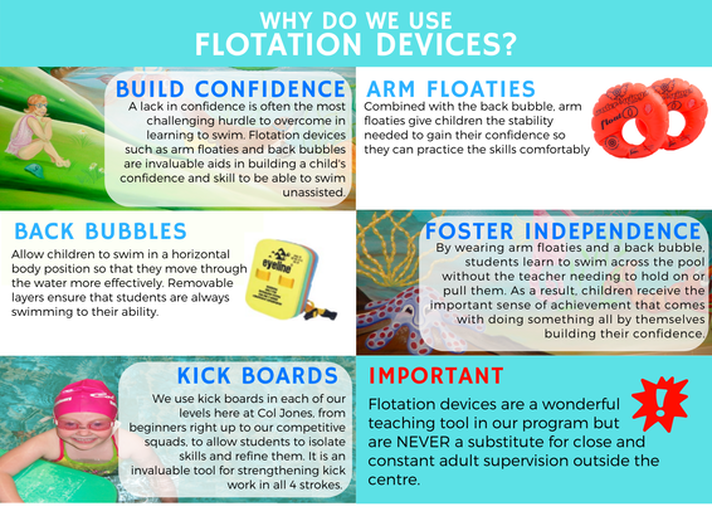 On average, one child dies each year from a portable pool related drowning in Australia. Many more are hospitalised and are left with severe, life-long conditions including brain injuries. Portable pools may seem safer - they are generally not as deep as in ground pools, are often temporary, and may appear less of a drowning risk. The fact is though, they are just as dangerous as below-ground pools. These pools include inflatable wading pools, plastic kiddie pools and even larger plastic pools with a frame.
Summer may be over, but until portable pools have been emptied and stored safely, the risk remains.
To read more on their Portable Pools campaign, head to Royal Life Saving Society's website. Author: Josephine Moss (Swim School Coordinator) |
Archives
April 2024
Categories |



 RSS Feed